We may be paid by providers listed here. It never affects our ratings.
Top Home Warranty.com
Guides25 min read

Home Warranty Coverage Limits (2026): What Each Company Pays

Home warranty coverage limits for 7 companies: HVAC, appliance, refrigerant and annual caps, cash-out rules, and how limits compare with 2026 repair costs.

Updated

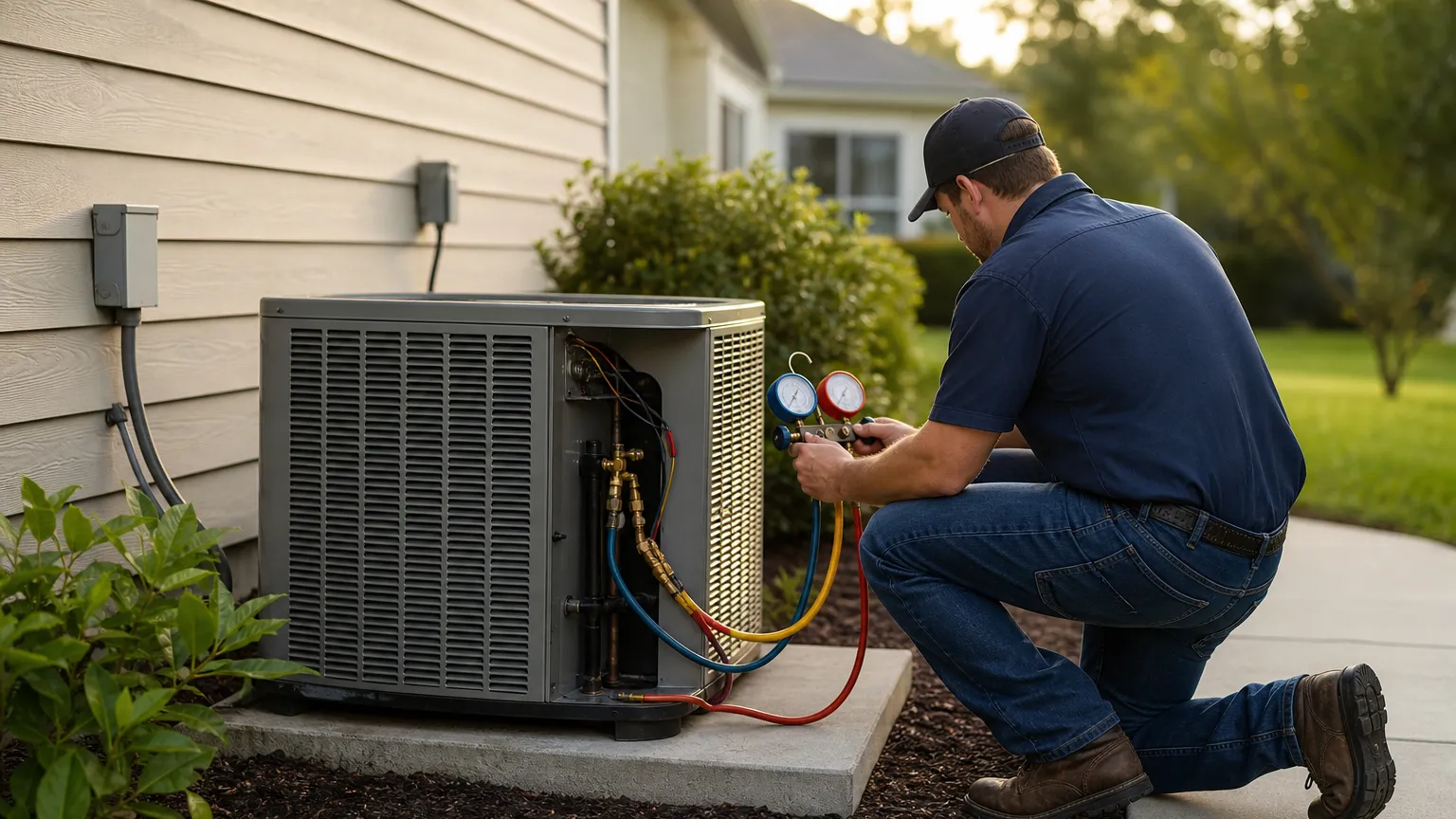
Technician wearing a cap and boots kneels beside a home air conditioning unit, checking gauges and connections outdoors.

Key takeaways

  • A coverage limit is the most a plan pays for a repair or replacement; most plans have per-item limits, sub-limits (refrigerant, code, access) and often an annual total cap.
  • HVAC limits cluster at $3,000-$5,000 while a central AC replacement averages about $6,000 (Angi, 2026) - so limits cover repairs well but often only part of an HVAC replacement.
  • First American has the highest limits where sold (no dollar cap on conventional HVAC, $3,500-$7,000 per appliance); AHS caps HVAC at $5,000 per system; Choice pays up to $3,000 per item; Select's ~$500 caps are the lowest.
  • How cash payouts are valued matters as much as the limit: company cost, wholesale or depreciated value - check the cash-in-lieu clause and the refrigerant limit before you buy.

What are home warranty coverage limits?

Quick answerA coverage limit is the most a home warranty company will pay for a covered repair or replacement. Most plans have three layers: a per-item limit (commonly $2,000-$5,000 for HVAC and $500-$7,000 per appliance), smaller sub-limits inside items (refrigerant, code upgrades, access, haul-away), and sometimes an annual total cap ($6,000 to $50,000, or none). Among the seven companies we track, First American has the highest limits (no dollar cap on conventional HVAC, $3,500-$7,000 per appliance) where it's sold; American Home Shield and 2-10 cap HVAC at $5,000; Choice pays up to $3,000 per covered item; and Select's caps of about $500 per appliance are the lowest. Anything above the limit is yours to pay.

Most home warranty comparisons lead with the monthly price. That's the wrong number to start with. Two plans that both "cover your air conditioner" can leave you with very different bills when the AC actually fails, because one pays up to $5,000 for the job and the other pays $2,000 - and the replacement costs $8,000. The limit, not the price or the list of covered items, decides what a claim is worth.

This guide explains every kind of limit you'll find in a home warranty contract, compares the published limits of the seven companies we track item by item, sets those limits against what repairs and replacements actually cost in 2026, and shows how to find - and use - the limits in a contract before you buy. Where companies' own documents conflict, or where reviewers report different numbers, we say so and tell you which source we trust more. New to home warranties? Start with what a home warranty is, then come back.

Our top-rated home warranty company

1
Our Top Pick
Choice Home Warranty logo
9.6
Exceptional

Two simple plans covering home systems and appliances, with a $3,000 per-item cap and coverage in 49 states

  • Basic & Total plans
  • $3,000 per covered item
  • Online claims, 24/7
  • Available in 49 states

Free Online Quote

Visit Site

Why limits matter more than the monthly price

A home warranty is a bet on two numbers: what you pay the company in a year, and what the company pays out when something breaks. The second number is controlled almost entirely by limits. Three pieces of evidence show how often they come into play.

FindingFigureSource
Share of most-recent claims approvedAbout 90% (about 4% denied, 6% pending)This Old House survey, January 2026
Denials because the repair cost more than the coverage limitAbout 20% of denialsThis Old House survey, January 2026
Denials for pre-existing conditions / items not coveredAbout 29% eachThis Old House survey, January 2026
Typical central AC replacementAbout $6,000 on average; most pay $3,900-$8,100Angi, 2026 data
Typical HVAC cap at national companies$2,000-$5,000 per system (First American: no dollar limit)Company plan pages and sample agreements

Note: other This Old House pages citing its 2025 survey put the "cost over the limit" share at 13% of denials. Either way, it's one of the three most common reasons a claim isn't fully paid.

That "denied" figure understates the problem, because a claim that hits a limit usually isn't denied at all. It's approved - and the company pays its maximum while you pay the rest. Those partial payouts don't show up in denial statistics, but they're the most common way homeowners end up disappointed. InvestigateTV's 2025 investigation into home warranty complaints found cases like an AC repair quoted at about $4,400 for which the company offered $560.55, and a check whose endorsement line said cashing it acknowledged the service request was fulfilled.

The practical lesson is simple: for the items that cost the most to replace - your HVAC system, water heater and refrigerator - the limit is worth more attention than a $5 or $10 difference in the monthly price.

The four kinds of home warranty limits

Contracts use different words - "covered item limit," "maximum benefit," "limit of liability," "aggregate" - but every limit falls into one of four types:

TypeWhat it capsTypical range (7 companies we track)Where to find it in the contract
Per-item limitThe most paid for one covered item (one furnace, one refrigerator) per termAbout $500 to $7,000; no dollar limit on some HVAC at First American"Limits of liability" or the coverage table
Category limitOne cap shared by a group, such as "heating and cooling combined" or "all plumbing"About $500 to $5,000Coverage table or a line under each system
Sub-limitA smaller cap inside a covered item: refrigerant, code and permits, access, crane, haul-away, tankless heaters, boilers$10 per pound of refrigerant to about $1,500 for code workFootnotes, "conditions" and "limitations" sections
Aggregate (annual) limitEverything the company pays in the term, across all claimsAbout $6,000 (HSC Standard) to $50,000 (AHS, 2-10); none at First American"Maximum aggregate" or "total benefit" clause

Per-item vs. category limits: a $3,000 example

The difference between "per item" and "per category" sounds technical, but it can double or halve a payout. Under a $3,000 per item limit, a failed furnace and a failed AC in the same year can each be paid up to $3,000. Under a $3,000 combined heating and cooling limit, both repairs share one $3,000. Some reviewers describe Choice's $3,000 as applying to heating and cooling together; others describe it as per item. Read the limits clause in the agreement for your state before relying on either reading.

Per term, per occurrence or per item - the time element

Most limits reset each contract term (usually 12 months). A few sub-limits apply per occurrence, and some are lifetime limits on the contract. A limit "per term" means a second failure of the same item in the same year draws from whatever is left. It also matters for multi-unit homes: 2-10's sample agreement gives each unit its own covered-item limit, so a house with two AC systems gets two caps, but not every contract says that.

Does the limit include labor?

In most contracts, yes: the limit caps what the company pays in total - parts, labor and, usually, refrigerant - not just the part. That matters because labor is often half the bill or more on HVAC and plumbing jobs. A few contracts phrase limits around "parts and components," and 2-10's help center describes its limits that way. If a contract doesn't say clearly whether labor counts against the limit, ask the company in writing before you buy - this is one of the most common gaps we found in published materials.

Home warranty coverage limits compared: all 7 companies

Here are the published limits for the consumer plans of the seven companies we track. Figures come from company plan pages and sample agreements where we could find them, and from 2025-2026 independent reviews where we couldn't. Limits vary by state, plan version and sales channel, so treat this table as a shortlist and confirm in the agreement for your address.

CompanyHVACAppliancesRefrigerantCode / permitsAnnual totalReplacement paid at
Choice$3,000$3,000 per itemNot covered under homeowner agreementExcluded (realtor plans: $250)Not publishedChoice's actual cost (may be below retail)
American Home Shield$5,000 per systemGold $2,000; Platinum $4,000$10/lb (Silver, Gold); unlimited (Platinum)Platinum only: $250$50,000AHS's expected cost ("substantially less than retail")
First AmericanNo dollar limit on conventional HVAC$3,500 (Starter, Essential); $7,000 (Premium)Varies by state and version; 100% on PremiumEssential $500; Premium $1,000 (some reviews: $1,500)NoneNegotiated supplier rates (may be below retail)
2-10$5,000 per system ($1,500 hydronic/steam)$2,000$10/lb inside the HVAC limitNot standard$50,000 (older pages: $25,000)Not published
Home Warranty of AmericaUp to $5,000 per item (some heating $1,500)Up to $5,000 per itemNot confirmed (older brochure: $500)Optional add-on$15,000HWA's actual cost (may be below retail)
The Home Service ClubAbout $2,000-$2,500About $300-$2,000 by itemNot confirmedReported excluded$6,000 (Standard); $9,000 (Comprehensive)Wholesale cost, excluding shipping, tax and installation
SelectAbout $3,000 per term (some reviewers: $2,000)About $500 per itemNot confirmedExcluded; cash at depreciated value if code blocks repairNot publishedDepreciated value

Sources: company plan pages, FAQs, help centers and sample agreements (AHS, First American, 2-10, Choice, Select); HWA 2021 contract; NerdWallet, Forbes, This Old House, CNBC, Top10 and ConsumerAffairs reviews (2025-2026). "Not published" means we couldn't find the figure in the company's materials, not that there is no limit.

Three patterns stand out. First, HVAC limits cluster at $3,000-$5,000 - well below the $6,000 average AC replacement - except at First American. Second, appliance limits range more than tenfold, from about $500 to $7,000. Third, how a replacement is valued varies as much as the limit itself: company cost, negotiated rates, wholesale cost or depreciated value. We cover that in detail below.

What are Choice Home Warranty's coverage limits?

Choice Home Warranty uses the simplest structure in the market: one $3,000 limit per covered item, applied across both of its consumer plans (Basic and Total). That covers furnaces, the water heater, plumbing and electrical failures and every covered appliance. NerdWallet's 2026 review applies the same $3,000 to combined heating and air conditioning and to ductwork. Optional items carry lower caps: about $500 for well pumps, septic systems, sprinklers and limited roof leaks, and about $250 for septic pumping. Covered items in a guest house or in-law unit are capped at $1,500.

Choice itemLimit
Each covered system or appliance$3,000
Heating and AC (per NerdWallet's reading)$3,000 combined
Well pump, septic, sprinkler, limited roof leak add-onsAbout $500
Septic pumpingAbout $250
Items in a guest house or in-law suite$1,500
Code violations, permits, haul-awayExcluded on homeowner plans ($250 code/permit allowance on realtor tiers)

Where Choice is strong: a $3,000 appliance limit is above AHS ShieldGold's $2,000 and 2-10's $2,000, and well above Select's $500. That makes Choice a good fit when appliances are your main worry. Its single number also makes the contract easier to understand than plans with a dozen sub-limits.

Where to be careful: $3,000 is below the cost of most full AC or furnace replacements, so on an older HVAC system expect to share the cost of a replacement. Code upgrades, permits and haul-away aren't covered on homeowner plans. When Choice pays cash instead of replacing, its user agreement says it pays its actual cost, "which at times may be less than retail"; some state versions say "available wholesale cost," and the California version excludes shipping, tax and installation. One reviewer (CNBC) gives $5,000 per item, but the same page elsewhere says $3,000, and every other source we found says $3,000.

The regulatory context: in January 2026 Choice agreed to an $11.8 million consent judgment with the Arizona Attorney General, announced on February 10, 2026. The state's original complaint alleged that Choice applied payment caps - including a $1,500 cap and a $500 plumbing cap - and didn't replace items customers believed were covered. Those are allegations, not findings; Choice did not admit wrongdoing. The settlement requires clearer disclosures before sale. For buyers, the takeaway is the same as with any company: read the limits clause in the current agreement for your state before you buy.

What are American Home Shield's coverage limits?

American Home Shield publishes its limits on each plan page, and they're among the clearest in the industry:

AHS limitShieldSilverShieldGoldShieldPlatinum
HVAC (per system, per term)$5,000$5,000$5,000
Each covered applianceNot covered$2,000$4,000
Refrigerant$10/lb, inside HVAC limit$10/lb, inside HVAC limitUnlimited
Code violations, permits, modificationsNoneNone$250 per term
Roof leak repair--Up to $1,000
Aggregate per term$50,000$50,000$50,000

Two details are worth knowing. First, AHS's $5,000 HVAC limit applies per system, so a home with two AC units has two limits. Second, every AHS plan pays for the parts and upgrades needed to meet current efficiency (SEER) and refrigerant standards when it replaces a covered HVAC unit - a real benefit as the industry moves from R-410A to newer refrigerants (see our refrigerant transition guide). When AHS pays cash instead of replacing, its 2023 California sample agreement says it pays what AHS would expect to pay, which can be "substantially less than retail."

AHS's real estate plans (ShieldEssential, ShieldPlus, ShieldComplete) use different limits - one AHS page lists up to $15,000 for HVAC on real estate plans - so don't compare a real estate brochure with a consumer plan page. Compare all three consumer tiers in our AHS plans guide.

What are First American Home Warranty's coverage limits?

First American has the highest limits we've found at any national company. Its FAQ says there's no total cap per term, and reviewers consistently report no dollar limit on conventional heating, air conditioning, plumbing and electrical systems.

First American limitStarterEssentialPremium
Conventional HVACNo dollar limit (scope varies by state)No dollar limitNo dollar limit
Each covered appliance$3,500$3,500$7,000
Water heaterVaries$1,000 (per NerdWallet)No dollar limit (per NerdWallet)
RefrigerantVaries by state and versionVaries100% covered
"Advantage" coverage (code, permits, crane, improper installation, mismatched systems)Not included$500 combined$1,000 combined (some reviews: $1,500)
AggregateNoneNoneNone

The catches are availability - First American is sold in about 35-37 states plus D.C. - and variation: plan contents and some sub-limits (refrigerant in particular) differ by state and contract version. One sample contract we reviewed listed refrigerant at $20 a pound with a cap on the customer's share; others say no dollar limit. When it pays cash in lieu of replacement, First American uses its negotiated supplier rates, "which may be less than retail."

What are Select Home Warranty's coverage limits?

Select Home Warranty has the lowest limits of the seven, which is the main reason its prices are low. Reviewers report about $500 per item for appliances, plumbing and electrical, and about $3,000 per term for heating and cooling - though Rocket Mortgage and Top10 report $2,000 for HVAC, and NerdWallet calls Select's sample contract unclear on limits. Add-ons are capped at about $400.

The larger issue is valuation. Select's terms and conditions allow it to replace an item or pay cash at the item's depreciated value, at its discretion. If a repair can't be done without violating code, its liability is limited to a cash settlement no greater than the depreciated cost. For a 12-year-old refrigerator, depreciated value can be a small fraction of the cost of a new one. Select can still make sense for small repairs at a low price - see our Select cost breakdown - but it isn't built for big replacements.

What are 2-10, HWA and Home Service Club's limits?

2-10 Home Buyers Warranty

2-10's help center lists $5,000 per covered HVAC system, $2,000 per appliance and $50,000 per agreement term. Its 2025 sample agreement adds that hydronic, glycol and steam systems (and the water heater that feeds them) are capped at $1,500, that refrigerant is paid at $10 a pound inside the HVAC limit, and that access and "return to rough finish" work is capped at $1,000. 2-10's own FAQ still says $25,000 per year, and This Old House reports $25,000 too - most likely an older plan version or a different sales channel, so check the agreement you're offered. Each unit in a multi-unit home gets its own limit. 2-10 is owned by Frontdoor, the parent of American Home Shield.

Home Warranty of America

HWA advertises up to $5,000 per covered item and a $15,000 total per term. NerdWallet reports sub-limits that matter: $1,000 for tankless and oil water heaters, $1,500 for some heating systems, and $2,000 for rust- and corrosion-related plumbing and electrical failures. Its 2022 California agreement lists many $400-$1,500 sub-limits. When HWA pays cash instead of replacing, it pays its actual cost, which can be below retail. HWA is sold in all 50 states.

The Home Service Club

HSC covers items regardless of age, make or model, but its caps are the tightest after Select's: per-item limits of roughly $300 to $2,000, heating and AC at about $2,000-$2,500 (sources differ), and an annual ceiling of about $6,000 on Standard and $9,000 on Comprehensive, according to This Old House. When HSC pays cash, BBB complaint records quoting its contract show it pays wholesale cost, excluding shipping, tax and installation, and that a paid-out item can't be claimed again for 12 months. A single HVAC replacement can use up much of HSC's annual total.

Are home warranty limits high enough? Limits vs. real 2026 costs

A limit only means something next to a price. The table below sets typical 2026 repair and replacement costs (installed, parts and labor) against the per-item limits of the plans we track. Repairs are where most claims land, and almost every limit covers them. Replacements are where the gaps open up.

ItemTypical repairTypical replacementCovered in full under...
Central AC$250-$700 (avg ~$375)Avg ~$6,000; most $3,900-$8,100Repairs: every plan. Replacement: First American; sometimes AHS/2-10 ($5,000)
Gas furnaceAbout $130-$500Avg ~$4,800; gas units $3,800-$10,000Lower-cost replacements under $5,000 limits; First American has no dollar limit
Heat pump$150-$650 (avg ~$400)Avg ~$8,350 (Fixr); ~$10,600 (This Old House)Rarely in full except at First American
Tank water heaterAvg ~$616About $900-$2,500Most plans; watch $1,000 water heater limits (2-10, FA Essential)
Tankless water heater$100-$650About $1,200-$5,500Often not in full: $1,000 tankless caps at HWA
RefrigeratorAbout $200-$500 (avg ~$400)$600-$2,300 typical; up to $7,000 high-endTypical models under $2,000-$3,000 limits; high-end only at FA Premium/AHS Platinum
Washer or dryerAbout $100-$650 (avg ~$300)Roughly $450-$2,300 for the unitMost plans except about $500 caps
DishwasherAbout $100-$300Installed avg ~$1,200Most plans except about $500 caps
Garage door opener$75-$300About $450-$765Nearly all plans that cover it
Sewer lineAbout $1,400-$5,300 (avg ~$3,300)About $3,000-$10,000Usually an add-on with low caps; full replacement rarely covered
Electrical panel-About $2,200-$6,200 (avg ~$3,600)Panel replacement is usually excluded or capped

Sources: Angi 2026 cost guides (AC, furnace, water heater repair, sewer line, dishwasher installation); Fixr 2026 (AC, heat pump, tankless repair); This Old House 2026 (appliance repair, heat pump); NerdWallet 2026 (water heater replacement); HomeWyse, January 2026 (garage door opener); Inch Calculator 2026 (panel). Local prices vary widely.

The pattern is clear: home warranty limits comfortably cover repairs, mostly cover appliance replacements, and often fall short on HVAC replacements. That's not a reason to skip a warranty - repairs are far more common than replacements, and even a partial payment on a $7,000 AC replacement is worth a lot - but it's the reason the HVAC limit should be the first number you check, especially if your system is more than 10 years old.

Three worked examples: how a limit changes your bill

Here's what three common claims would cost you under different limits. Each assumes a covered failure, a $100 service fee and no exclusions.

1. A 13-year-old AC needs replacing: $7,500 installed

LimitPlan paysYou pay (incl. $100 fee)
$2,000$2,000$5,600
$3,000 (Choice)$3,000$4,600
$5,000 (AHS, 2-10)$5,000$2,600
No dollar limit (First American)$7,500, less excluded items$100 plus any code, permit or crane costs beyond the Advantage allowance

2. A refrigerator's sealed system fails: $1,400 repair

Under a $500 cap, you pay $100 plus $900. Under a $2,000, $3,000, $3,500 or higher cap, you pay only the $100 fee. This is where low-limit plans hurt most: a sealed-system repair is a routine claim, not a catastrophe, and it still blows through a $500 cap.

3. A tankless water heater needs replacing: $3,200 installed

Under a $1,000 tankless sub-limit, you pay $100 plus $2,200. Under a plan that treats the tankless unit like any other covered item with a $3,000 limit, you pay $100 plus $200. If you own a tankless heater, look for the word "tankless" in the limits section - it's one of the most common hidden sub-limits.

How do refrigerant limits work?

Refrigerant is the sub-limit homeowners most often miss, and it's getting more important. Many plans pay $10 per pound of refrigerant, counted inside the HVAC limit. Installed refrigerant costs far more than that:

RefrigerantTypical installed price per poundWhere you'll find it
R-410A$40-$75 (avg about $60)Most AC systems installed about 2010-2024
R-454BAround $80; about $30-$110 by cityMany new systems since 2025
R-22Avg about $125; $50-$250Systems installed before about 2010

Sources: Angi R-410A price guide (2026 data), Angi AC recharge guide (2026), Angi R-22 guide (2025 data).

The math: a repair that needs 5 pounds of R-410A at $60 a pound costs $300 in refrigerant. Under a $10-per-pound limit, the plan pays $50 and you pay $250 on top of the service fee. On an R-22 system the gap is larger: 5 pounds at $125 is $625, of which the plan pays $50. Plans with unlimited refrigerant (AHS ShieldPlatinum, First American Premium, or as an add-on at AHS and 2-10) close that gap. If your AC is more than a few years old, refrigerant coverage is worth pricing - our R-410A phase-out guide explains why prices are rising.

How are replacements and cash payouts valued?

Most contracts let the company choose between repairing, replacing, or paying you cash instead ("cash in lieu"). When it pays cash, the formula in the contract decides how much - and it's never retail price. Here is what each company's materials say:

CompanyCash-in-lieu basisWhat it means for you
First AmericanNegotiated supplier rates, by mutual agreementBelow retail, but based on a new equivalent item
American Home ShieldWhat AHS would expect to payCan be "substantially less than retail," per its sample agreement
ChoiceChoice's actual cost (some states: wholesale; California excludes shipping, tax, installation)Below retail; you may pay delivery and installation
Home Warranty of AmericaHWA's actual costBelow retail
The Home Service ClubWholesale cost, excluding shipping, tax and installationBelow retail; item can't be claimed again for 12 months after a payout
SelectDepreciated value, at Select's discretionCan be a small fraction of the cost of a new item
2-10Not found in published materialsAsk before you buy

Three practical points follow. First, a cash offer is usually negotiable only in the sense that you can ask the company to show its math - request the model it priced and the source. Second, before cashing a check, read the endorsement: some checks say cashing it closes the claim. Third, the depreciated-value basis is the one to avoid if you're buying a warranty mainly for big replacements; on an older appliance, depreciation can wipe out most of the payout.

California is a partial exception: the Department of Insurance's filing checklist for home protection contracts says benefits are limited to repair or replacement services, not cash payments to the contract holder (California Insurance Code section 12740). If you live in California, ask how a company's California agreement handles items it can't replace.

The sub-limits that catch homeowners out

Beyond refrigerant, these are the sub-limits and exclusions that most often turn a "covered" claim into a partial one. Each can add hundreds or thousands of dollars to a replacement.

Sub-limit or exclusionWhy it mattersHow companies handle it
Code violations and permitsReplacing old HVAC or a water heater often requires code upgrades: venting, pads, electrical, expansion tanksAHS Platinum $250; First American Advantage $500-$1,000; Choice and Select exclude on homeowner plans
Modifications to fit a new unitA new furnace or AC rarely fits an old space exactly: ductwork transitions, carpentry, line setsUsually bundled with code coverage; often excluded
Access ("return to rough finish")Opening walls, floors or concrete to reach a pipe or line2-10: $1,000; First American includes concrete access in Advantage; many plans exclude restoring finishes
Crane and equipmentRooftop units often need a craneFirst American Advantage; excluded at many companies
Haul-away of old equipmentDisposal can cost $50-$200+AHS pays to remove defective equipment on an approved replacement; Choice excludes on homeowner plans
Tankless, boiler, steam and geothermalExpensive equipment with its own lower caps2-10: $1,500 hydronic/steam; HWA: $1,000 tankless, $1,500 some heating
Rust and corrosionCommon cause of plumbing and water heater failureHWA: $2,000 cap; Florida contracts can't exclude it unless it contributed to the failure (Fla. Stat. 634)

Our claim denial guide covers the other side of the coin - exclusions that stop a claim entirely - and our older homes guide explains why code coverage matters most in houses built before 1990.

Which home warranty has the highest coverage limits?

First American has the highest limits of the seven companies we track: no dollar limit on conventional HVAC, plumbing and electrical, $3,500 per appliance on its lower tiers and $7,000 on Premium, and no annual total. The catch is that it's sold in only about 35-37 states plus D.C. Among companies sold nearly everywhere, American Home Shield ShieldPlatinum has the highest appliance limit ($4,000) along with a $5,000 HVAC limit per system and unlimited refrigerant, and Choice offers a $3,000 limit on every covered item at a lower price.

"Highest limits" isn't automatically "best value," though. The right limit depends on what's in your house.

Your situationLimit that matters mostWhere to look first
HVAC system 10+ years oldHVAC limit, refrigerant, code and permitsFirst American (where sold), AHS ShieldPlatinum
Newer HVAC, older appliancesPer-appliance limitChoice ($3,000 per item), First American, AHS ShieldPlatinum
High-end or built-in appliancesAppliance limit above $3,000First American Premium ($7,000), AHS ShieldPlatinum ($4,000)
Tankless water heaterTankless sub-limitPlans without a separate tankless cap; check HWA's $1,000
Boiler or steam heatHydronic/boiler sub-limitAvoid $1,500 boiler caps if replacement is likely
Two or more HVAC systemsWhether limits are per unit or per categoryAHS (per system), 2-10 (per unit)
Tight budget, mostly small repairsService fee and basic coverageChoice; Select only if you accept $500 caps

For most homeowners who want one plan that covers appliances well, keeps the contract simple and costs less than a top-tier plan, Choice's $3,000-per-item structure is a sensible middle ground - as long as you go in knowing that a full HVAC replacement will likely exceed it. If your HVAC system is old and replacement is the main risk you want covered, a higher HVAC limit is worth paying more for.

How to find the limits in a home warranty contract: 7 steps

Limits are disclosed in every contract we reviewed, but they're often spread across several sections. Here's how to find them in about 15 minutes.

  1. Get the sample agreement for your state. Not the plan page or brochure. Most companies post state-specific agreements; ask for one if you can't find it. Limits differ by state.
  2. Find the limits section. Search the document for "limit," "maximum," "aggregate" and "liability." Note every dollar figure and what it applies to.
  3. Check per item vs. per category. Does "$3,000" apply to each item, or to heating and cooling combined? Is it per unit if you have two systems?
  4. Look for the time element. Per term, per occurrence or for the life of the contract?
  5. Search for sub-limits by keyword. Refrigerant, tankless, boiler, steam, geothermal, code, permit, modification, access, concrete, crane, haul-away, rust, corrosion.
  6. Read the cash-in-lieu clause. What value does the company use if it pays cash: its cost, wholesale, or depreciated value? Is installation included?
  7. Ask about anything unclear - in writing. Especially whether labor counts against the limit and whether limits are per unit. An email answer is far more useful in a dispute than a phone call.

Then compare the two or three numbers that matter most for your house - usually the HVAC limit, the appliance limit and refrigerant - side by side, before you compare monthly prices. Our cost guide covers prices and service fees.

What happens when a repair costs more than the coverage limit?

You pay the difference. The company pays up to its limit, and you pay the contractor (or the company) for the rest, plus the service fee. In practice you'll usually be offered one of three options:

  • Pay the overage and proceed. The company's contractor does the work; you pay the amount above the limit, often before the job starts.
  • Take cash in lieu. The company pays you an amount - often its limit or its cost estimate, whichever is lower - and you hire your own contractor. You may lose the company's workmanship guarantee on the job.
  • Decline. You can usually decline a replacement offer, though you may still owe the service fee.

Before you agree, do these four things

  1. Ask for the itemized estimate and which limit each line is charged against. Access, refrigerant and code work sometimes have separate allowances that should be applied before the main limit.
  2. Get a second quote from a contractor of your choice. If the overage is large, an independent quote tells you whether the price is reasonable.
  3. Check whether a cheaper repair is possible. A compressor or coil replacement may fit inside a limit when a full system replacement doesn't.
  4. Read any check's endorsement before cashing it. Some say cashing the check closes the claim.

If you believe the company applied the wrong limit or undervalued a payout, escalate in writing, then file a complaint with your state regulator (see below) and the Better Business Bureau. Our claim denial guide has a step-by-step escalation plan.

Do state laws regulate home warranty limits?

No state sets minimum dollar limits, but several regulate how limits are disclosed and how claims are paid. There's no federal law specific to home warranties.

StateLaw and regulatorWhat it means for limits
CaliforniaInsurance Code section 12740 and following; Department of InsuranceContracts must state coverage, exclusions and limitations in "clear and conspicuous" terms (s. 12762); benefits are repair or replacement services, not cash to the holder
FloridaChapter 634, Part II; Department of Financial ServicesExclusions, restrictions and limitations must be in boldface (s. 634.312); contracts can't exclude rust or corrosion unless it contributed to the failure
TexasOccupations Code chapter 1304; Texas Department of Licensing and RegulationResidential service companies are licensed; contracts must state that service normally begins within 48 hours

Enforcement also happens through attorneys general. Arizona's $11.8 million consent judgment with Choice Home Warranty (January 2026) required clearer pre-sale disclosures, and InvestigateTV's 2025 reporting noted actions by Ohio's attorney general in 2023 and 2024 and cease-and-desist orders in several states against various companies. Our state-by-state guide covers your state's regulator.

Do home warranties have a maximum payout?

Most do. Nearly every plan caps each covered item, and most cap the total paid per term - about $6,000 to $15,000 at smaller companies and $50,000 at American Home Shield and 2-10. First American is the main exception: its FAQ says it has no total cap per term, and it has no dollar limit on conventional HVAC.

Does a home warranty pay for full replacement?

Yes, when an item can't be repaired economically - but only up to the item's limit, and the company decides whether to repair, replace or pay cash. A replacement is usually with an item of similar features and efficiency, not the same brand. Costs above the limit, and excluded items such as code upgrades or haul-away on some plans, are yours.

Do home warranty limits include labor?

In most contracts, yes: the limit caps the total the company pays, including parts and labor. Because labor can be half or more of an HVAC or plumbing bill, a limit that covers parts only would be far less valuable. Few companies state this plainly on their plan pages, so confirm in the agreement or in writing.

What home warranty plans have worthwhile coverage limits?

A worthwhile plan for most homes has an HVAC limit of at least $3,000-$5,000 (or none), appliance limits of at least $2,000-$3,000, refrigerant coverage above $10 a pound if your AC is older, and pays cash at a new-item cost rather than depreciated value. Among the companies we track, First American (where sold), American Home Shield ShieldGold and ShieldPlatinum, Choice and 2-10 meet most of those tests; Select's and The Home Service Club's caps are low for anything beyond small repairs.

Which providers offer the highest appliance replacement limits?

First American Premium ($7,000 per appliance) and American Home Shield ShieldPlatinum ($4,000) have the highest appliance limits among the companies we track, followed by First American Starter and Essential ($3,500) and Choice ($3,000 per item). AHS ShieldGold and 2-10 cap appliances at $2,000, and Select at about $500.

Can I raise my home warranty's coverage limits?

Sometimes. The usual ways are moving up a tier (AHS ShieldGold to ShieldPlatinum doubles the appliance limit), buying an add-on such as unlimited refrigerant (AHS, 2-10) or 2-10's Luxury Package, or choosing a company with higher limits. You generally can't negotiate a higher limit on an individual contract.

The bottom line

Coverage limits decide what a home warranty is actually worth. Nearly every plan covers routine repairs in full; the differences show up on replacements, where HVAC limits of $3,000-$5,000 meet AC replacements that average around $6,000. Check the HVAC limit, the appliance limit, refrigerant and code coverage, and how cash payouts are valued - in that order - before you compare monthly prices.

First American has the highest limits where it's sold. American Home Shield ShieldPlatinum is the strongest high-limit option sold nearly nationwide. Choice offers a straightforward $3,000 per-item limit at a lower price, which suits most homes for appliance and repair coverage, with the caveat that a full HVAC replacement will usually exceed it. Whatever you choose, read the limits clause in your state's agreement before you buy.

Related guides: what a home warranty covers, the most comprehensive home warranty, why claims get denied, service fees and deductibles and whether a home warranty is worth it.

Sources and methodology

We compared the published limits of the seven home warranty companies we track using company plan pages, FAQs, help centers and sample agreements, cross-checked against 2025-2026 independent reviews. Where sources conflicted - for example, 2-10's $50,000 vs. $25,000 total, Select's $3,000 vs. $2,000 HVAC limit, First American's Advantage cap, or The Home Service Club's heating and AC limits - we say so and favor the company's own current materials. Limits vary by state, plan version and sales channel.

Company sources: American Home Shield plan pages (ShieldSilver, ShieldGold, ShieldPlatinum), appliance and air conditioner coverage pages and 2023 California sample agreement; Choice Home Warranty user agreement, state-resident pages and realtor brochure; Select Home Warranty terms and conditions; First American Home Warranty FAQ and contract language quoted in a 2026 BBB response; Home Warranty of America 2021 contract and 2022 California agreement; 2-10 Home Buyers Warranty help center (dollar limits), FAQ and 2025 sample agreement.

Independent reviews: NerdWallet, Forbes Advisor, This Old House, CNBC Select, money.com, Top10, Rocket Mortgage and ConsumerAffairs (2025-2026); Better Business Bureau complaint records.

Data: This Old House home warranty survey (January 2026) and February 2024 survey; InvestigateTV, "No guarantee" (July 28, 2025).

Costs: Angi 2026 cost guides (central AC, furnace, water heater repair, sewer line, dishwasher installation, R-410A and AC recharge) and Angi 2025 R-22 data; Fixr 2026 (AC, heat pump and tankless repair; heat pump replacement); This Old House 2026 (appliance repair, heat pumps); NerdWallet 2026 (water heater cost); HomeWyse (January 2026, garage door openers); Inch Calculator 2026 (electrical panels).

Regulation: California Insurance Code sections 12740 and 12762 and the Department of Insurance home protection filing checklist; Florida Statutes section 634.312 and Department of Financial Services home warranty overview; Texas Occupations Code chapter 1304; Arizona Attorney General press release (February 10, 2026).

This guide is general information, not legal or insurance advice. We may earn a commission from some links on this site, which never changes the facts we report. See our editorial policy.

Ready to compare home warranty companies?

See how top companies stack up on coverage, pricing, and claims service.

Sources & references

Regulatory and ownership facts on this page come from public records. Pricing, plan and contract details come from each provider's published information. This content is for information only and is not legal, insurance or financial advice - always read the full contract before buying a plan.

  1. 1.Attorney General Mayes Announces $11.8 Million Settlement with Choice Home Warranty - Arizona Attorney General - February 2026
  2. 2.Frontdoor, Inc. Completes Acquisition of 2-10 Home Buyers Warranty - Frontdoor, Inc. via Business Wire - December 2024
  3. 3.Frontdoor, Inc. Quarterly Report (Form 10-Q), Q2 2026 - U.S. Securities and Exchange Commission (EDGAR)
  4. 4.American Home Shield plans - American Home Shield
  5. 5.Choice Home Warranty user agreement - Choice Home Warranty
  6. 6.Select Home Warranty terms and conditions - Select Home Warranty
  7. 7.The Home Service Club pricing and plans - The Home Service Club