We may be paid by providers listed here. It never affects our ratings.
Top Home Warranty.com
Buying24 min read

Is a Home Warranty Worth It? The Honest Math (2026)

When a home warranty pays off and when it doesn't, using real repair costs, the industry's own financials and 351 customer reviews - plus a 10-minute test.

Updated

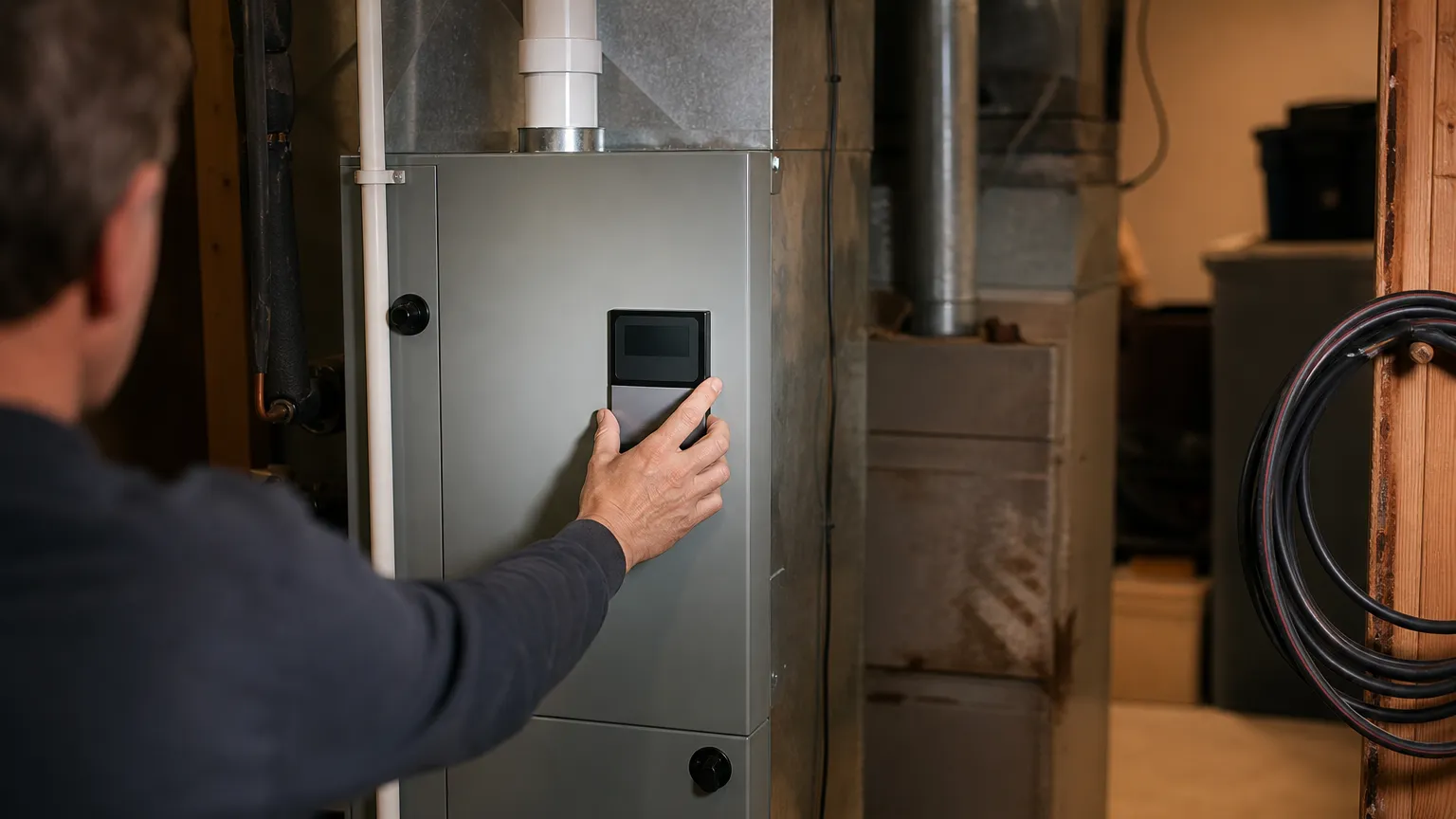
A person adjusts the control panel on a modern gray furnace unit in a basement utility room.

⚡ Key Takeaways & Quick Verdict

  • On average, home warranty customers pay in more than they get back: Frontdoor, the largest company, spent roughly 45 cents of each revenue dollar on delivering service in 2025 (55% gross margin).
  • A warranty pays off on big-system replacements - an AC (~$6,000) or furnace (~$4,800) - but loses money in years with no claims or only small repairs, which usually cost less than a year of premiums.
  • It's most worth it when two or more major systems are past 75% of their expected life and a $5,000 surprise would go on a credit card; it's rarely worth it for new homes, high-end appliances or people with a solid repair fund.
  • Caps and the cash-out formula matter more than price: most companies pay cash at their own cost, and reviewers reported offers like $406 toward a $1,799 refrigerator.

Is a home warranty worth it? The direct answer

Written by the Top Home Warranty Editorial Team | Fact-checked October 2026

Quick verdictA home warranty is worth it for some homeowners and a poor deal for others, and you can tell which group you're in. On average, customers pay in more than they get back - the largest company's own financials show roughly 45 cents of each revenue dollar going to the cost of delivering service. What you're really buying is protection against a bad year: a dead AC (about $6,000 to replace) or furnace (about $4,800) for a $650-a-year plan plus a $100-$125 fee. It pays off when several major systems are past mid-life, you couldn't comfortably cover a $5,000 surprise, and you choose a plan with caps high enough for your equipment. It rarely pays off in newer homes, for high-end appliances, or if you already have a solid repair fund.

Most "is it worth it" articles end with "it depends." That's true, but it isn't useful. This guide tells you what it depends on, puts numbers on each factor, and gives you a way to work out your own answer in about ten minutes.

We built it from four kinds of evidence:

  • The industry's own numbers - Frontdoor, Inc., the publicly traded parent of American Home Shield and 2-10 Home Buyers Warranty, discloses revenue, claims costs and renewal rates in its SEC filings.
  • Real repair and replacement costs from 2025-2026 cost guides, and how long systems actually last.
  • Our own analysis of 351 recent customer reviews of five major companies, captured October 26, 2026.
  • The contracts themselves - caps, fees and how each company pays when it won't repair.

What the industry's own financials say about value

Home warranty companies rarely talk about the economics of their product. One does, because it has to. Frontdoor files annual and quarterly reports with the SEC, and they're the clearest public window into how much of your money comes back as repairs.

Frontdoor metric (fiscal 2025)FigureWhat it tells you
Revenue$2.09 billionScale: the largest US home warranty company
Gross margin55%Roughly 45 cents of each revenue dollar went to the cost of delivering services
Home warranties in force2.11 million (Dec 31, 2025)Flat versus 2.12 million in 2024
Service requests per yearAbout 3.8 million, via about 17,000 contractor firmsRoughly 1.8 requests per warranty per year, on average
Customer retention79.2%About four in five customers stay each year
Renewal rate, existing customers81%Customers who've kept a plan a year tend to keep it
First-year renewal, real estate customers29%Most people who get a plan at closing drop it after year one
First-year renewal, direct-to-consumer (2024)72%People who chose to buy one mostly keep it

Two readings of this table matter for your decision.

First, the average customer pays more than they receive. A 55% gross margin means the cost of delivering service - mostly payments to contractors and for parts and equipment - was about 45% of revenue. (Cost of services also covers some non-warranty business lines, so treat it as an approximation.) That isn't a scandal. It's how every insurance-like product works: the company has to cover overhead, marketing and profit. It means a home warranty is not an investment that "pays for itself" on average. Its value is in moving money from good years to bad ones.

Second, renewal behavior is a revealed-preference test. Eight in ten established customers renew, and 72% of people who bought directly renewed after their first year in 2024. Customers who got a plan bundled into a home purchase - often paid by the seller - renew at just 29%. People who've lived with a warranty and chosen to keep paying for it are telling you something. So are the seven in ten home buyers who walked away once the plan stopped being free.

Our top-rated home warranty company

1
Our Top Pick
Choice Home Warranty logo
9.6
Exceptional

Two simple plans covering home systems and appliances, with a $3,000 per-item cap and coverage in 49 states

  • Basic & Total plans
  • $3,000 per covered item
  • Online claims, 24/7
  • Available in 49 states

Free Online Quote

Visit Site

The real question: could you cover a $5,000 repair tomorrow?

Because the average customer gets back less than they pay, the case for a home warranty rests almost entirely on cash flow and risk, not on expected savings.

That's why your finances matter more than your house. According to the Federal Reserve's 2026 report on household well-being (covering 2025), 63% of adults said they would cover a $400 emergency expense with cash or its equivalent - meaning more than a third would not, and 12% couldn't pay it by any means. Bankrate's 2026 emergency savings report found fewer than half of Americans had three months of expenses saved. And Angi's 2025 State of Home Spending report put the average household's emergency home repair spending at $1,143 for the year.

Set those numbers next to the cost of a failed air conditioner (about $6,000 to replace) and the logic of a home warranty becomes clear. For a household that would put a $6,000 AC on a credit card at 20%-plus interest, a plan that turns that into a $100 service fee plus premiums is real protection. For a household with $30,000 in savings, the same plan is a convenience with a negative expected return.

Consumer Reports has long recommended the second approach for people who can manage it: put the money you'd spend on a warranty into a savings account dedicated to home repairs. On extended service contracts generally, a Consumer Reports editor has noted that the median cost of a contract is about the same as the median cost of a single repair. The Federal Trade Commission's advice is more neutral - check the total cost including per-visit fees, the reimbursement limits and exclusions, and the company's reputation - but it lands in the same place: know exactly what you're buying.

And customers who do buy are mostly satisfied. In This Old House's January 2026 survey of about 2,000 warranty customers, about 83% said they were satisfied or very satisfied. (The publisher earns affiliate revenue from home warranty reviews, and respondents were current customers, so read that as an upper bound.)

How the seven major home warranty companies compare on value

"Worth it" depends on which plan you'd actually buy. The same $600 a year buys very different protection depending on the caps, the fee, and how the company pays when it won't repair. Here are the factors that decide value, side by side:

CompanyTypical monthly priceService feeKey limitsCash-out basisTrustpilot (Oct 2026)Top complaint in recent reviews
Choice~$46-$58~$100$3,000 per covered itemChoice's actual cost3.9 (63,234)Waiting for a technician or fix (13 of 99)
American Home Shield~$30-$90 by tier$100 or $125$5,000 HVAC; $2,000-$4,000 per applianceAHS cost, "likely" below retail3.5 (16,329)Long waits, unresolved repairs (13 of 60)
Select~$36-$64~$60-$75~$500 per item; ~$3,000 HVACCash settlement at Select's option3.2 (6,413)Claim denied over fine print (19 of 72)
First American~$40-$140 by plan/state$100 or $125$3,500-$7,000 appliancesNegotiated supplier rates, by agreement4.0 (19,350)Long waits, unresolved repairs (8 of 60)
Home Warranty of America~$48-$61~$100Up to $5,000 most repairsHWA's actual cost4.0 (3,403)Claim denied (7 of 60)
The Home Service Club~$54-$67~$65-$125$300-$2,000 per itemNot confirmedNo profile-
2-10 Home Buyers Warrantyfrom ~$27-$35$65-$125$5,000 AC; $2,000 per applianceEstimate of local retail costNo profile-

Prices, fees and limits are typical figures from published plans, sample contracts and quotes; they vary by plan, state and contract year. Choice, Home Warranty of America and The Home Service Club share a parent company (Rely Home); American Home Shield and 2-10 share one (Frontdoor).

Three things jump out once you lay it out like this.

The monthly price is the least informative number in the table. A plan with a $500 appliance cap and a plan with a $4,000 appliance cap can cost within $10 a month of each other. The cap decides whether a refrigerator claim gets fixed or turns into a check that covers a fraction of a new one.

The cash-out basis is the hidden value driver. Most companies pay cash at their own discounted cost. Only 2-10's published sample contract ties cash-outs to an estimate of local retail prices. If you have mid-range or high-end appliances, that single clause can be worth more than a lower premium.

Review scores cluster closer than you'd expect. Every company with a Trustpilot profile sits between 3.2 and 4.0. The differences that matter show up in what people complain about - denials at one company, waits at another - not in the headline score.

Did customers feel they got their money's worth? What 351 reviews show

On October 26, 2026 we read every recent Trustpilot review of Choice, American Home Shield, Select, First American and Home Warranty of America - 351 reviews in all - and tagged what each one said. (The full method and company-by-company breakdowns are in our claim denial study.)

The value question splits reviewers into two groups that barely overlap.

People whose claim was a clean repair were happy. The most common praise, at every company, was for the technician and the speed: a water heater replaced within days, a dryer fixed four days after the call, an HVAC replacement that cost one AHS customer only the $125 service fee. For these customers the math was obvious - one claim covered a year or more of premiums.

People whose claim hit a limit were furious. The five most common complaints across all 351 reviews were:

  • Slow or unresolved repairs - 52 reviews
  • Denied claims - 47
  • Hard-to-reach customer service - 42
  • Service fees paid with little or nothing repaired - 24
  • Cash-out offers far below replacement cost - 20

The money complaints are the ones that answer "is it worth it." Reviewers reported offers like $406 toward a refrigerator that costs $1,799, $546 toward a water heater they'd paid $1,700 to replace, and $175 toward a dishwasher after an $85 fee. One long-time Choice customer summed up the doubt: the $272 offered toward a new dishwasher "doesn't even come close," and "I average more in premiums per month, not really sure if it's worth it."

A warning about the star ratings themselves: most positive reviews carry Trustpilot's "Invited" or "Verified" label, meaning the company prompted them, usually right after a completed repair. In our batches, those 230 labeled reviews averaged 4.4 stars; the 49 unlabeled ones averaged 1.4. Both groups are real customers. They're just answering different questions - "how was your repair?" versus "how did this go when it got hard?"

What repairs and replacements actually cost in 2026

The value of a home warranty is the gap between what you'd pay out of pocket and what you pay under the plan. Here's the out-of-pocket side, from 2025-2026 cost guides:

Repair or replacementTypical cost (no warranty)Typically covered by home warranties?
Central AC replacement~$6,000 average (typical $3,900-$8,100)Yes, up to the HVAC cap (often $3,000-$5,000)
Heat pump replacement~$4,200-$7,900Usually, up to the HVAC cap
Furnace replacement~$4,800 average (typical $2,800-$7,500)Yes, up to the cap
Water heater replacement (tank)~$600-$2,500 installedYes; some plans limit tank size or exclude tankless
Central AC repair~$350-$375 average (compressor $1,000-$3,000)Yes
Furnace repair~$318 averageYes
Refrigerator repair~$250-$650 depending on sourceOften only on combo plans or with an add-on
Washer repair~$200-$220 averageCombo plans or add-on
Dishwasher repair~$200 averageUsually
Dryer repair~$180 averageCombo plans or add-on
Oven or range repair~$200-$300 averageUsually
Garbage disposal replacement~$200-$550 installedUsually
Plumbing leak (accessible pipe)~$250-$850Usually; access limits apply to slabs and walls
Main sewer line clog~$150-$500 to snakeOften, from an accessible cleanout
Electrical: breaker replacement~$100-$260Usually
Contractor service call / diagnostic fee~$75-$200 (HVAC), $50-$200 (plumbing)Replaced by the warranty's own service fee ($60-$150)

Look at the shape of that table. Almost every repair costs less than a year of premiums. The items that make a home warranty pay off are the replacements of big systems - and those are exactly where caps, cash-outs, permits and modifications come into play.

How long your systems and appliances should last

Whether a big failure is likely in the next year or two depends on age. These are commonly cited life expectancies (actual life varies with use, climate and maintenance):

System or applianceTypical life expectancySource
Central air conditioner10-15 yearsNAHB / Bank of America study (2007)
Heat pump~16 yearsNAHB study; InterNACHI
Gas furnace~18 years (electric ~15)NAHB study
Tank water heater~10-15 yearsNAHB study; U.S. Department of Energy
Tankless water heaterUp to ~20 yearsU.S. Department of Energy; ENERGY STAR
Refrigerator~9-13 yearsInterNACHI; NAHB study
Dishwasher~9 yearsInterNACHI; NAHB study
Clothes dryer~13 yearsInterNACHI; NAHB study
Gas range~15-17 yearsInterNACHI

The practical takeaway: a home with an original 2010s AC, furnace and water heater is entering the window where several big replacements are likely within a few years of each other. A home where those were replaced recently is not.

When does a home warranty pay for itself? Five real-world scenarios

Here's a typical plan run through five realistic years. We assume $650 a year in premiums (about $54 a month, close to the $56 average monthly quote in This Old House's 2026 survey) and a $100 service fee per claim, and we use average costs from the table above.

Scenario (one year)Out of pocket, no warrantyCost with warrantyResult
1. Nothing breaks$0$650-$650
2. Two small repairs (dishwasher $200, dryer $180)$380$650 + $200 fees = $850-$470
3. Water heater replaced (~$1,500)$1,500$650 + $100 = $750+$750
4a. AC replaced (~$6,000), plan with $3,000 HVAC cap$6,000$650 + $100 + $3,000 over cap = $3,750+$2,250
4b. AC replaced (~$6,000), plan with $5,000 HVAC cap$6,000$650 + $100 + $1,000 over cap = $1,750+$4,250
5. Refrigerator dies; company offers cash at its cost ($406) toward a $1,800 model$1,800$650 + $100 + ($1,800 - $406) = $2,144-$344

Scenario 5 uses a cash-out amount a First American customer reported in our review study; outcomes like it are common enough to plan for. And scenarios 4a and 4b assume no uncovered permits, code updates or "modifications" - which on an AC replacement can add hundreds or thousands of dollars on plans that exclude them.

The pattern is consistent: small repairs lose money, replacements of big systems win - and how much you win depends on the cap and the fine print. In a single year, you come out ahead only if the plan pays for more than your premium plus fees, roughly $750 or more of covered work in this example.

Over several years, the math is about probability. Three quiet years at $650 cost you $1,950 - which one covered AC replacement under a $5,000 cap more than repays. If you're likely to replace a major system during the time you'd hold the plan, the numbers can work. If you aren't, they usually won't.

The 10-minute age audit: will a warranty likely pay off for your home?

This is the quickest way we've found to turn the averages into a decision about your house. It's a rule of thumb, not a guarantee - but it captures the factors that actually drive value.

Step 1: List your big-ticket items and their ages

Check the manufacture date on the data plate of your AC or heat pump, furnace and water heater (the serial number often encodes the year), and estimate the age of your refrigerator, washer, dryer, dishwasher and range.

Step 2: Mark each one past 75% of its expected life

Using the table above: an AC 10+ years old, a furnace 13+, a tank water heater 8+, a refrigerator 8+, a dishwasher 7+, and so on.

Step 3: Score it

Big systems (AC/heat pump, furnace, water heater) past 75% of lifeCould you pay $5,000 today without debt?Our read
2 or 3NoStrong case for a warranty - choose a plan with high HVAC limits and permit/code coverage
2 or 3YesOptional - a warranty smooths costs, but self-insuring is reasonable
1NoReasonable case - especially if that one system is your AC or heat pump
1YesProbably skip - start a repair fund instead
0EitherSkip - rely on manufacturer warranties and savings

Then adjust: lean toward a warranty if you have several aging appliances too, if you live somewhere the AC is a necessity (Texas, Arizona, Florida - see our state guides), or if you value having one number to call. Lean away if your appliances are high-end or built-in, if you have strong relationships with local contractors, or if you can't produce maintenance records for older systems.

Who a home warranty is NOT for

Plenty of homeowners would be better off skipping a home warranty entirely. Be honest with yourself if you recognize your situation here.

You have a newer home or newly replaced systems

If your HVAC, water heater and major appliances are under five years old, most failures will be covered by manufacturer warranties (commonly 5-10 years on HVAC parts when registered, and often 6 or more years on water heater tanks), and the odds of a large failure are low. You'd be paying for overlap.

You have a healthy repair fund

If you can absorb a $5,000 surprise without debt or real hardship, you're effectively self-insured - and you keep the premiums, choose your own contractor, and never argue about exclusions. A home warranty is a cash-flow product. If cash flow isn't your problem, it's mostly a convenience you're paying for.

Your appliances are high-end or built-in

Built-in refrigerators, pro-style ranges and premium brands are where home warranties perform worst. Caps are often $2,000-$4,000 per appliance, and cash-outs are usually calculated at the company's cost for a "comparable" model the company chooses. In our review study, an AHS customer was offered about $2,900 for an 84-inch built-in refrigerator that costs $9,000-$10,000 to replace. A manufacturer's extended warranty or a separate repair budget fits these kitchens better.

You want to choose your own contractor

Nearly every contract lets the company pick the contractor and refuses to reimburse work done without prior approval. If you have a trusted HVAC company or plumber you'd call anyway, you'll find that restriction frustrating - and in an emergency, it can leave you waiting.

Your main worry is storms, floods or water damage

Home warranties cover mechanical breakdowns, not damage to your home. Hurricane, wind, flood, fire, and the water damage from a burst pipe are homeowners, flood or windstorm insurance territory - and North Carolina law, for example, effectively requires home warranties to exclude fire, flood and wind. Don't buy a warranty expecting it to do insurance's job.

You're likely to file borderline claims

If your systems are very old, poorly documented, or you can't show maintenance records, expect more "pre-existing," "lack of maintenance" and "wear versus neglect" disputes. A warranty can still make sense for old equipment - but only with the right plan and a paper trail.

The costs and limits that decide whether you come out ahead

The premium is just the entry fee. These are the terms that actually determine your return:

Cost or limitTypical rangeHow it erodes value
Service (trade call) fee$60-$150 per visit or claimUsually owed even if the claim is denied; some companies charge per visit, so repeat visits add up
Per-item caps$500-$4,000 for appliances; $3,000-$5,000 for HVACA covered failure above the cap leaves you the difference
Cash in lieuAt company cost (most) or local retail estimate (2-10)Offers can fall far below what a comparable replacement costs you
Permits, code and modificationsOften excluded; some top tiers include ~$250 or moreA covered replacement can still trigger hundreds or thousands in uncovered work
ExclusionsPre-existing conditions, maintenance, improper installation, secondary damageThe most common denial reasons
Waiting periodUsually 30 days on new direct-to-consumer plansFailures in the first month aren't covered
Cancellation feeVaries by state (Texas caps it at $50; Arizona at the lesser of $75 or 10%)Limits the cost of leaving a plan that isn't working

The service fee deserves special attention because it changes the math on small repairs. If your fee is $125 and a plumber would charge $175 to clear a drain, a warranty claim saves you $50 - and costs you the wait. Home warranties earn their money on the big failures, not the small ones.

And they don't always earn it even then. Twenty-four reviews in our study described paying a fee and getting little or nothing repaired; one First American customer said they paid $100 per visit on more than eight occasions for a refrigerator that was never fixed. Our denied claim guide breaks down every one of these limits and how to fight back when they're applied unfairly.

Alternatives to a home warranty

A home warranty isn't the only way to manage repair risk. Depending on your situation, one of these may fit better - or work alongside a warranty.

OptionBest forWatch out for
Dedicated repair fund (put the premium in savings instead)Disciplined savers with a few years' runway before major systems age outA big failure in year one, before the fund builds up
Manufacturer warranties (register new equipment)Newer HVAC, water heaters and appliancesUsually parts only - labor often isn't covered after the first year or so
Manufacturer or retailer extended warrantiesOne expensive appliance, especially high-end brandsPrice relative to the appliance; read who services it
Credit card purchase protection / extended warrantyNew appliances bought on eligible cardsMany issuers have scaled these benefits back; check your card's current terms
HVAC maintenance plans from local contractorsHomes where the AC or heat pump is the main worryUsually tune-ups and discounts, not full repair coverage
Utility repair plansSpecific risks like water or sewer service linesNarrow coverage; read the limits
Appliance insuranceCovering a handful of named appliancesSimilar caps and exclusions to home warranties - see our appliance insurance guide

For many households the smartest setup is a combination: register every new appliance for its manufacturer warranty, keep a repair fund for the small stuff, and buy a home warranty only during the years when several big systems are past mid-life at once.

If you're buying or selling a home

Home sales are where many people first get a home warranty, and the economics are different. Frontdoor's filings estimate that hundreds of thousands of US home sales each year include a home warranty, often paid by the seller as a concession. For a buyer, a seller-paid first year is close to free protection during the period when you know least about the house - and real estate plans often cover unknown or undetectable pre-existing conditions that direct-to-consumer plans exclude.

The decision that actually matters comes at renewal. Only about 29% of Frontdoor's real estate customers renew after year one. Before you renew - or let it lapse - run the age audit above. If the first year surfaced aging systems, renewing may be smart. If the house turned out to be in good shape, putting the premium in savings may be smarter.

For sellers, a listing-period plan can reassure buyers and cover failures while the home is on the market. It's a negotiating tool, not a long-term product decision.

Seven questions to ask before you buy any home warranty

  1. What's the cap for each system I care about - HVAC, water heater, each appliance - and is there an annual or total limit?
  2. How is a cash-out calculated if you won't repair: your cost, negotiated rates, or local retail price? Can I choose a replacement instead?
  3. Are permits, code upgrades and modifications covered, and up to how much?
  4. How do you handle pre-existing conditions - all excluded, or only known or detectable ones?
  5. Is the service fee charged per claim or per visit, and do I owe it if the claim is denied?
  6. What's your emergency response time for no heat or no AC, and when can I use my own contractor?
  7. How do I cancel, and what refund and fee apply in my state?

Get the answers from the sample contract for your state, not the sales call. Our complete home warranty guide explains how to read one, and our 2026 rankings compare the companies on these terms.

Do most people come out ahead with a home warranty?

No, not on average. The largest company's financials show roughly 45 cents of each revenue dollar going to the cost of delivering service, so the typical customer pays more than they receive. Individual customers who face a major system replacement often come out well ahead; customers with quiet years or only small repairs don't.

How much does a home warranty cost per year?

Most plans cost roughly $300 to $700 a year, with premium tiers and add-ons costing more, plus a service fee of about $60 to $150 per claim or visit. This Old House's 2026 survey found an average quoted premium of about $56 a month.

Is it better to save money instead of buying a home warranty?

If you can reliably set aside the premium and could absorb a $5,000 repair without debt, saving usually wins over time - Consumer Reports has long recommended a dedicated repair fund. A warranty makes more sense if a large surprise bill would go on a high-interest credit card, or if several major systems are aging at once.

Is a home warranty worth it on an older home?

Often yes, if you choose the right plan. Older homes are more likely to need major replacements, which is where warranties pay off. But they also face more pre-existing, maintenance and code-related disputes, so choose a plan with high limits, code and permit coverage, and keep maintenance records.

Is a home warranty worth it on a new home?

Usually not. New systems and appliances carry manufacturer warranties, new construction often comes with a builder warranty, and the odds of a major failure in the first few years are low.

What is the biggest downside of a home warranty?

The gap between what you expect to be covered and what is. In our analysis of 351 recent reviews, the most common complaints were slow repairs, denied claims, hard-to-reach service, fees paid for little or no repair, and cash-out offers far below replacement cost.

Final verdict and next steps

A home warranty is a cash-flow tool with a negative average return, and it should be judged that way. It's worth buying when the risk it removes is one you genuinely can't carry: several big systems near the end of their lives, and no easy way to pay for them. In that situation, a well-chosen plan can turn a $6,000 emergency into a $100 service call. In most other situations, you'll do better keeping the premium.

Here's what to do next:

  1. Run the age audit on your AC or heat pump, furnace and water heater tonight. It takes ten minutes.
  2. Check your safety net. Could you pay $5,000 tomorrow without borrowing? Be honest.
  3. If the audit says buy, compare plans on caps, cash-out basis and permit/code coverage - not price. Start with our 2026 home warranty rankings and the company reviews.
  4. If it says skip, open a dedicated savings account, set an automatic transfer equal to a plan's premium (about $55 a month), and register every new appliance for its manufacturer warranty.
  5. If you already have a plan, re-run the audit before each renewal, and read our guide to denied claims so you know how to push back if a claim goes wrong.

References and further reading

  • Frontdoor, Inc. - Form 10-K for fiscal 2025 (filed with the SEC); fourth-quarter and full-year 2025 results (Business Wire, February 26, 2026); second-quarter 2026 results (August 6, 2026); Form 10-K for fiscal 2024 (direct-to-consumer first-year renewal rate).
  • Board of Governors of the Federal Reserve System - Economic Well-Being of U.S. Households in 2025 (May 13, 2026).
  • Bankrate - 2026 Annual Emergency Savings Report.
  • Angi - 2025 State of Home Spending report; 2026 cost guides for HVAC repair, AC installation, water heater installation, washer, dryer and plumbing.
  • HomeAdvisor, HomeGuide, Fixr, This Old House and Forbes Home - 2025-2026 cost guides for furnace, heat pump, appliance, sewer line and electrical repairs.
  • National Association of Home Builders / Bank of America Home Equity - Study of Life Expectancy of Home Components (2007), as reproduced by Florida Realtors and others.
  • International Association of Certified Home Inspectors (InterNACHI) - Standard Estimated Life Expectancy Chart for Homes.
  • U.S. Department of Energy, Building America - tankless water heater measure guide; ENERGY STAR water heater materials.
  • Consumer Reports - home warranty and extended warranty guidance (as reported July 2026 and in AARP coverage).
  • Federal Trade Commission - "So what's the deal with 'home warranties'?" consumer alert (February 2023).
  • This Old House - 2026 Home Warranty Survey (January 2026; affiliate-funded publisher).
  • Top Home Warranty - analysis of 351 Trustpilot reviews of Choice, American Home Shield, Select, First American and Home Warranty of America (captured October 26, 2026); company sample contracts.

Figures were checked in October 2026. Costs vary by region and home; contract terms vary by plan, state and year, and your contract controls. We may earn a commission from some links on this site, which never changes the facts we report. See how we rank and our editorial policy.

Ready to compare home warranty companies?

See how top companies stack up on coverage, pricing, and claims service.

Sources & references

Regulatory and ownership facts on this page come from public records. Pricing, plan and contract details come from each provider's published information. This content is for information only and is not legal, insurance or financial advice - always read the full contract before buying a plan.

  1. 1.Attorney General Mayes Announces $11.8 Million Settlement with Choice Home Warranty - Arizona Attorney General - February 2026
  2. 2.Frontdoor, Inc. Completes Acquisition of 2-10 Home Buyers Warranty - Frontdoor, Inc. via Business Wire - December 2024
  3. 3.Frontdoor, Inc. Quarterly Report (Form 10-Q), Q2 2026 - U.S. Securities and Exchange Commission (EDGAR)
  4. 4.American Home Shield plans - American Home Shield
  5. 5.Choice Home Warranty user agreement - Choice Home Warranty
  6. 6.Select Home Warranty terms and conditions - Select Home Warranty
  7. 7.The Home Service Club pricing and plans - The Home Service Club