The coverage map gives the quick answer. This section goes deeper, one system at a time, with what typically goes wrong, what each product does, what it costs if you're on your own, and the cheapest ways to avoid the problem altogether.
Air conditioning and heat pumps
What goes wrong: compressors, capacitors, fan motors and control boards fail with age; refrigerant leaks develop in coils; condensate drains clog. Central AC systems typically last 10-15 years and heat pumps about 16, according to commonly cited life expectancy data from the National Association of Home Builders and InterNACHI.
Insurance: covers the unit only when a covered event damages it - lightning, fire, a falling tree, hail, wind or theft. Copper theft from outdoor condensers is a real and covered loss. Age-related failure is excluded. If a clogged condensate line overflows and damages a ceiling, the ceiling is typically covered as accidental discharge, but the AC isn't.
Home warranty: this is the product's core use. Most systems and combo plans cover central AC and heat pumps up to an HVAC cap (commonly $3,000-$5,000), but watch for exclusions on refrigerant, code-required upgrades, permits and "modifications" - especially now that new systems use the R-454B or R-32 refrigerants rather than R-410A. Our refrigerant guide explains why a failed condenser can now mean a full-system replacement.
Equipment breakdown endorsement: can cover a sudden electrical or mechanical breakdown, such as a failed control board on a newer system, but generally not a compressor that's simply worn out.
On your own: typical AC repairs run about $350-$375; compressors $1,000-$3,000; full replacement averages about $6,000, with heat pumps about $4,200-$7,900, per 2025-2026 cost guides.
Prevention: annual professional tune-ups (keep the invoices - they also protect a warranty claim), filter changes every one to three months, clearing debris around the outdoor unit, and a float switch on the condensate line to shut the system off before it overflows.
Furnaces and boilers
What goes wrong: igniters, flame sensors, blower motors, inducer motors and control boards; on boilers, circulator pumps and leaks. Gas furnaces typically last about 18 years.
Insurance: the furnace itself is covered for fire, lightning and other covered perils. A cracked heat exchanger from age is excluded. A boiler that suddenly bursts and floods the basement is the classic split: the water damage is typically covered; the boiler isn't.
Home warranty: covered on systems and combo plans, subject to caps. Heat exchangers and some components can have separate limits, and many plans exclude code upgrades such as venting changes required for a new high-efficiency unit.
On your own: repairs average about $318; replacement averages about $4,800.
Prevention: annual inspection before heating season, regular filter changes, and a working carbon monoxide detector on every level.
Water heaters
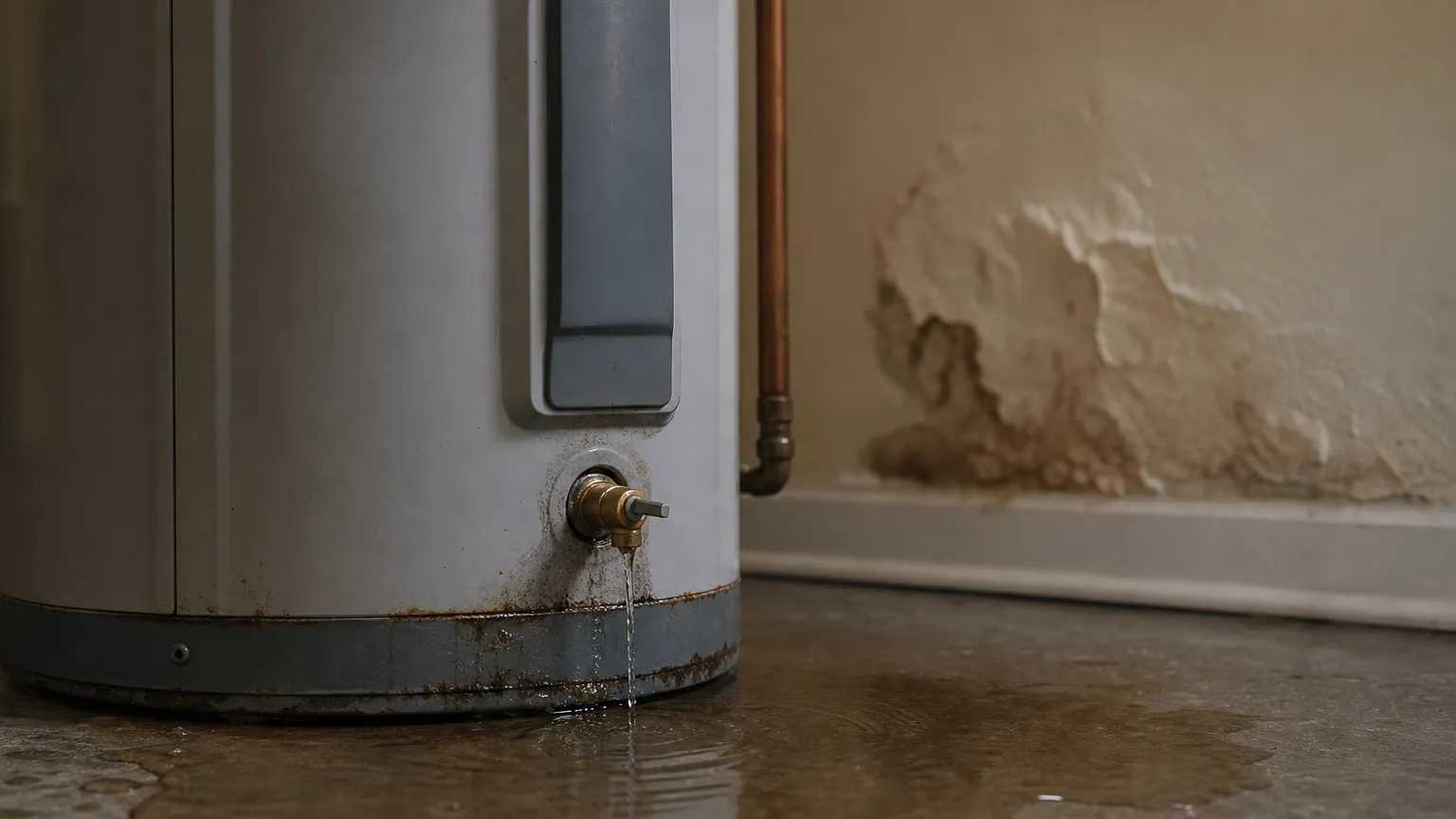
What goes wrong: tanks corrode and leak (often at the bottom), elements and thermostats fail, gas valves and pilot assemblies fail. Tank water heaters typically last about 10-15 years; tankless units up to about 20, according to the Department of Energy and ENERGY STAR.
Insurance: the most misunderstood item in this guide. A sudden tank rupture is a covered event for the damage it causes - the policy's water-heater peril and accidental discharge coverage apply - but the heater itself is excluded as wear and tear or as the appliance the water escaped from. A tank that slowly seeps for weeks is likely excluded entirely.
Home warranty: typically covers repair or replacement, though some plans limit tank size or exclude tankless units, and many exclude sediment-related failures if there's no maintenance history. California requires water heaters to be seismically strapped; warranties generally won't pay to bring an installation up to that code.
On your own: a tank replacement typically runs about $600-$2,500 installed.
Prevention: flush sediment annually (especially in hard-water areas), test the pressure relief valve, put a drip pan with a drain under the tank, and add a $20-$40 leak sensor. If your tank is past 10 years old and showing rust at the base, plan a replacement before it chooses the timing for you.
Plumbing inside the home
What goes wrong: supply line bursts, pinhole leaks in copper, failed shutoff valves, clogged drains, toilet and faucet failures, slab leaks.
Insurance: sudden leaks are covered for the damage they cause and the cost of opening walls or floors to reach the leak - not the pipe repair itself. Gradual leaks, mold, wet rot and the leak's source are excluded. Sewer or drain backup is excluded without an endorsement.
Home warranty: typically covers leaks and breaks in water, drain and gas lines within the home, and clearing stoppages from accessible cleanouts. Faucets and fixtures, access through concrete, and lines outside the foundation are common exclusions or have low limits.
On your own: a general plumbing repair averages about $341; accessible leaks $150-$500; in-wall leaks can run $500-$5,000 or more.
Prevention: replace rubber washer and toilet supply hoses with braided steel ones every five years or so, know where your main shutoff is, and consider an automatic water shutoff valve - some insurers offer discounts for monitored leak detection.
Buried water and sewer lines
What goes wrong: tree roots invade or crush clay and cast-iron sewer laterals; old galvanized water lines corrode; ground shifts break lines.
Insurance: typically excluded - wear and tear, earth movement and roots. Service line endorsement: the purpose-built fix, often about $10,000 of coverage including excavation for about $20-$50 a year. Home warranty: only with an exterior line add-on where offered. Utility plans: available but compare their price and limits with your insurer's endorsement.
On your own: snaking a main line runs about $150-$500; excavation and replacement can run several thousand dollars or more.
Prevention: a camera inspection before buying an older home (often a few hundred dollars), and keeping large trees away from the sewer lateral.
Electrical systems
What goes wrong: breakers fail, panels overheat, wiring deteriorates, outlets and switches fail.
Insurance: fire and lightning damage are covered, including the resulting damage to the home. A breaker that simply wears out isn't. Equipment breakdown: often lists electrical panels. Home warranty: systems plans typically cover wiring, panels and breakers within the home, but exclude inadequate capacity, code upgrades and some panel brands or ages. Our electrical systems guide covers the details.
On your own: breaker replacement runs about $100-$260; full panel replacement roughly $500-$2,200 or more.
Prevention: a whole-home surge protector (often a few hundred dollars installed) protects HVAC boards and appliances from non-lightning surges that both products may not cover.
Kitchen and laundry appliances
What goes wrong: refrigerator compressors and ice makers, dishwasher pumps and control boards, oven igniters and boards, washer pumps and bearings, dryer heating elements.
Insurance: appliances are covered for fire, theft and other named perils, but not for breakdown. A leaking dishwasher's damage to the floor is typically covered if the leak was sudden. Equipment breakdown: often covers sudden breakdown, sometimes with food spoilage. Home warranty: covered on appliance and combo plans up to per-appliance caps; refrigerators, washers and dryers are sometimes only on higher tiers. Expect cash-out offers at the company's cost for appliances it won't repair - and if you have high-end or built-in appliances, look closely at caps.
On your own: most appliance repairs run about $180-$400; refrigerator repairs can reach $650 or more.
Prevention: clean dryer vents annually (lint is both a fire risk and a common warranty exclusion), clean refrigerator coils, and check dishwasher and washer hoses.
Roofs
Insurance: the most important item for insurance, and the one changing fastest. Storm damage is covered, but more policies now pay older roofs on a depreciated (actual cash value) basis or a roof payment schedule, and about half of carriers in catastrophe-exposed states use cosmetic damage exclusions, according to ZestyAI's analysis of filings. Wear and age-related leaks are excluded. Home warranty: some plans sell limited roof leak repair add-ons, usually with low caps and many exclusions; none replace a roof. Prevention: annual inspections, prompt repairs, and - in hurricane states - fortified roofing standards, which Louisiana now requires insurers to recognize with discounts.
Pools, wells and septic systems
Insurance: covers these against covered perils (a tree falling on pool equipment, lightning striking a well pump), not wear. Equipment breakdown: Liberty Mutual's version lists well pumps and pool and spa equipment. Home warranty: typically optional add-ons with their own limits. If your home relies on a well or septic system - as roughly half of North Carolina households use septic, for example - make sure whichever product you choose actually includes it.